How Generative AI
Sees Nokia (Literally)
Here’s a stat that should keep telecom industry execs up at night: 14% of operators now use large language models (LLMs) to discover new vendors. Not Google. Not Gartner alone.
And not all search traffic is created equal.

Someone Googling “best laptop” might just be browsing. But someone asking an LLM, “Which vendor is leading in AI-native network automation?” That person could be a handful of conversations away from a purchase order.
LLM traffic tends to be higher intent, richer in context and more focused on seeking deeper expertise. These tools don’t just scrape your website; they gather press coverage, analyst reports, operator case studies and industry commentary. In other words, they rely heavily on the exact content that good PR is supposed to generate.
The Setup
To answer these questions, we used Generative Engine Discovery Insights (GEDI): our homegrown tool that makes the “black box” of AI a little more transparent. GEDI allows us to see the real questions people are asking AI engines, which sources those engines trust and how they’re answering.
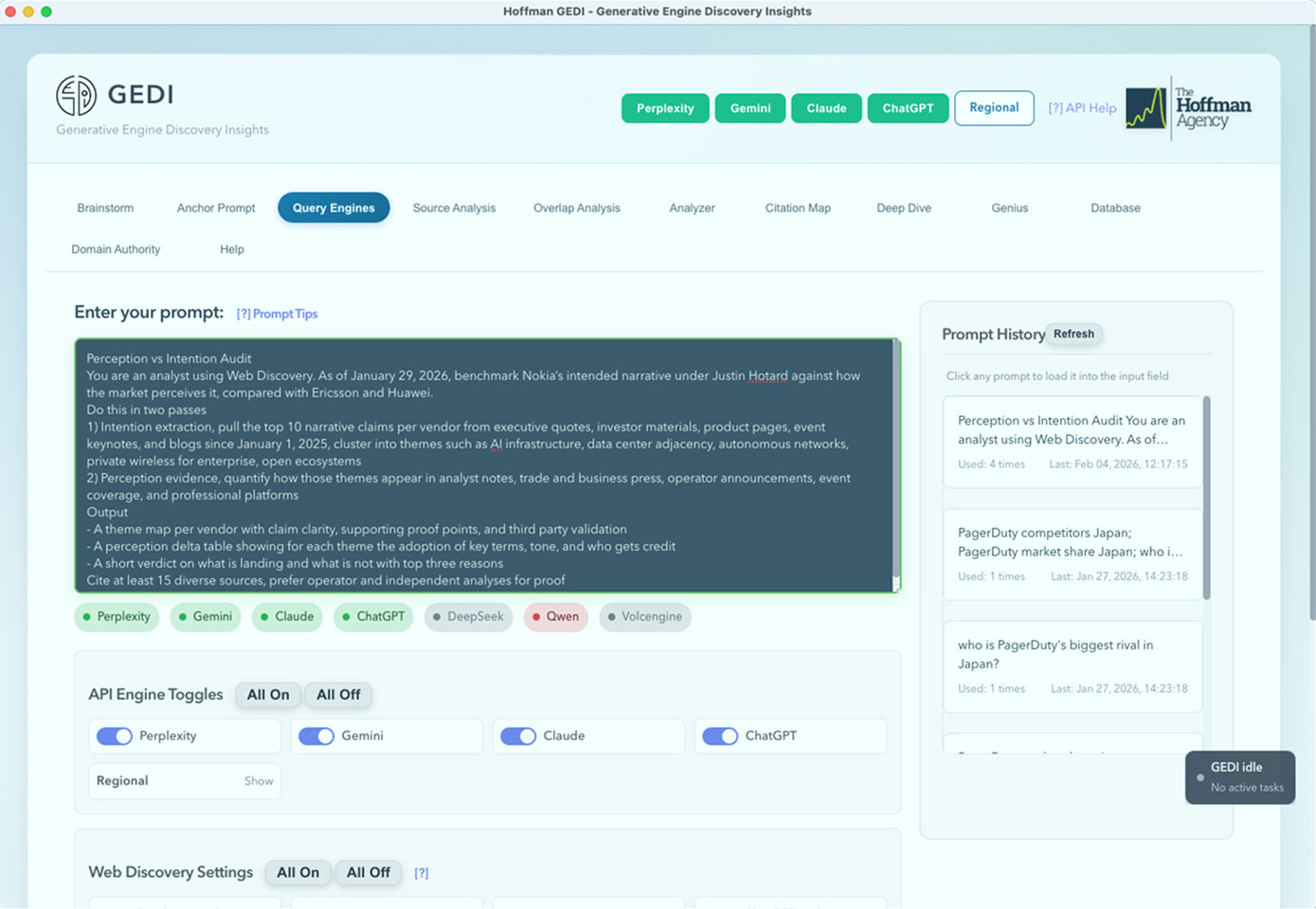
We used GEDI to run a single “Perception vs. Intention Audit” prompt across four LLM engines in one geography. Each session had the same twofold mission:
- Extract intention. Pull Nokia’s top narrative claims from executive quotes, investor decks, product pages, keynotes, blog posts, etc. Basically, everything published since January 1, 2025.
- Assess perception. See how those themes show up in third-party sources, including analyst coverage, trade press, operator announcements, event coverage, LinkedIn posts from industry insiders, etc.
If you’re into the technical sausage-making, check out the full-length prompt we used below.
What We Found
We ran this same prompt four times across four different AI engines. Each time, the engines searched the web, extracted Nokia’s messaging and assessed how third parties talk about Nokia versus competitors.
Over the course of this exercise, we tracked a whopping:
733 total citations spanning
189 unique domains
The citation volume ranged from more than 400 daily references at the start to approximately 50 by the final session, as the engines refined their source selection.
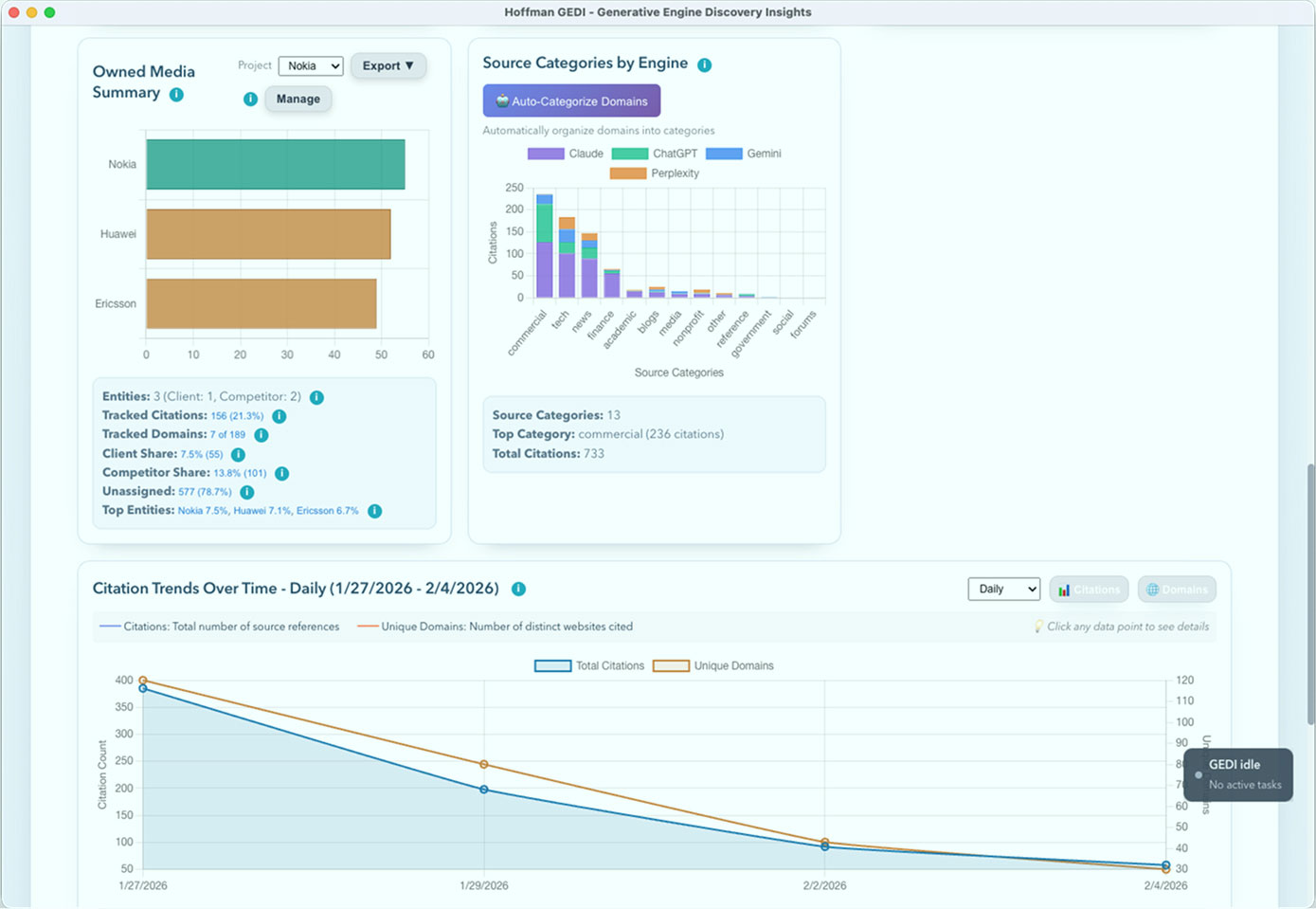
What emerged wasn’t just data; it was a pattern. A repeating signal about which sources AI trusts, which narratives stick and where credit gets assigned.
Here’s what stood out.
AI Engines Trust the Same Sources
When multiple LLMs consistently cite the same sources, those sources become the market narrative. Across four runs and four AI engines, we tracked 100 unique source domains; 23 of them (23%) were cited by at least two engines, indicating cross-engine convergence. In total, the engines produced 603 cited-URL instances, which normalize to 253 unique links.
The top publications cited? Light Reading, Telco Magazine, Fierce Network and Mobile World Live. These aren’t just trade pubs. They’re the third-party sources AI engines trust most.
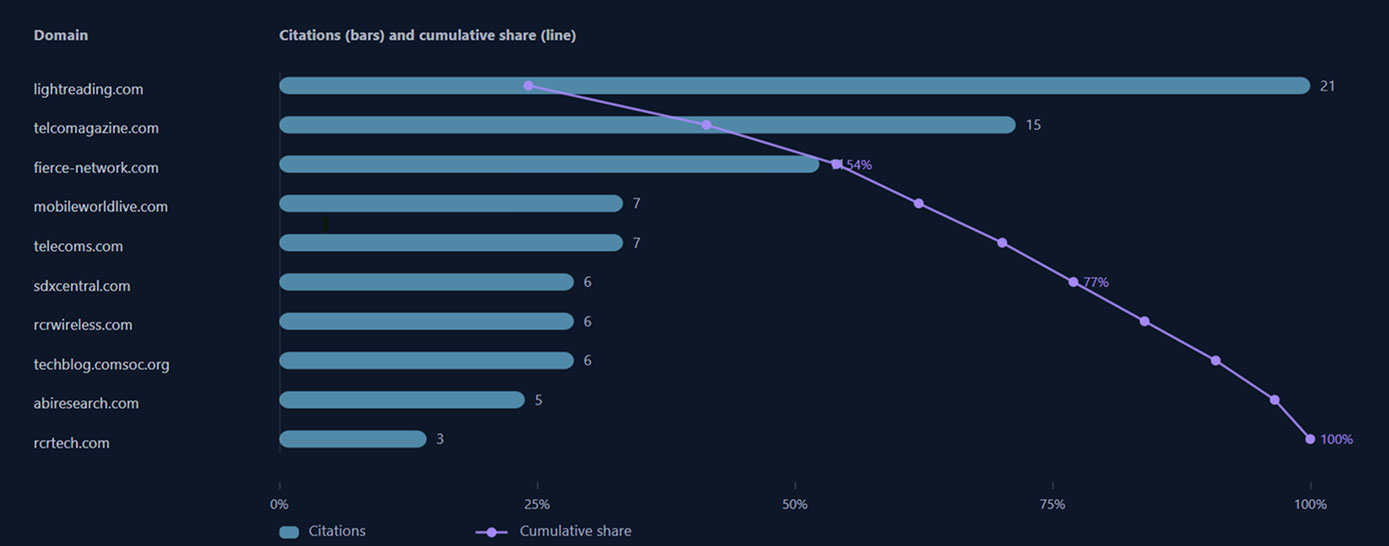
Nokia-owned sources were heavily referenced: Nokia.com recorded 45 domain-level citation instances across the four runs. But real influence is distributed across that handful of publications. If you’re not showing up there (with outcomes, not just announcements), you’re not shaping the AI narrative.
Where Nokia Owns the Story
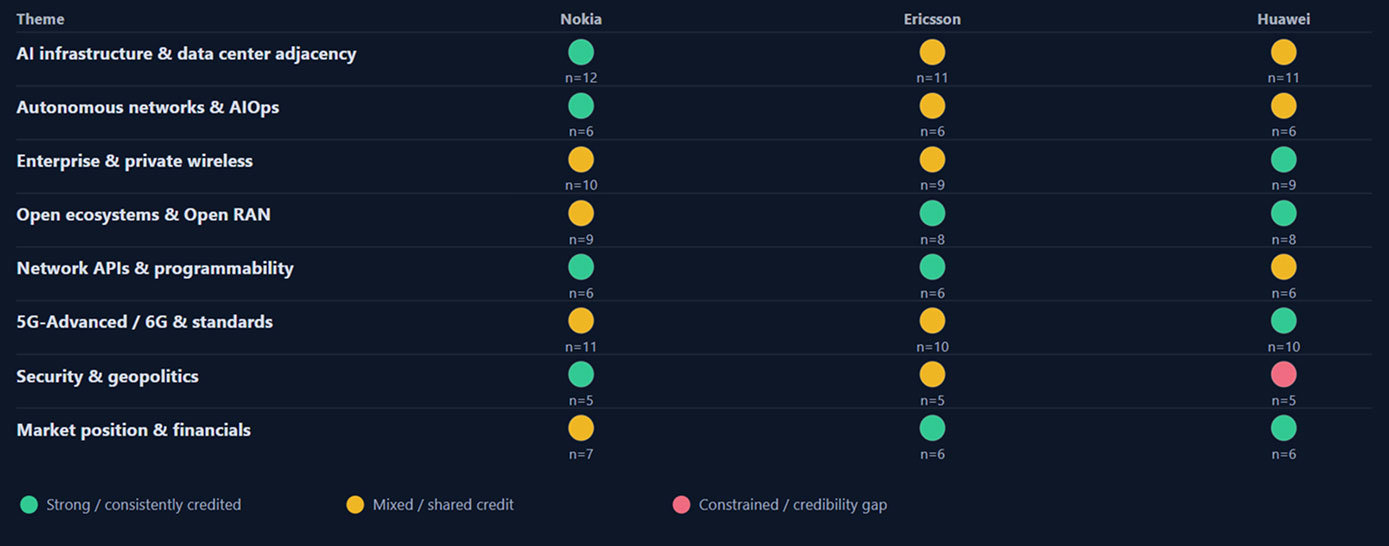
We then scored narrative strength for Nokia, Ericsson and Huawei across eight themes. Nokia is winning in:
- AI Infrastructure & Data Center Adjacency
- Autonomous Networks & AIOps
- Network APIs & Programmability
- Security & Geopolitics
When AI engines search for telecom vendors moving into AI infrastructure, Nokia shows up consistently and credibly with sources from analysts, trade press and industry commentary. Likewise, Nokia is framed as an innovation-forward player in network automation and AI-driven ops. Finally, Nokia is positioned as developer-friendly and execution-focused as well as a trusted Western supplier, especially versus Huawei.
Where Competitors Take Control of the Narrative
Unfortunately, Nokia didn’t own the space in every theme we tracked.
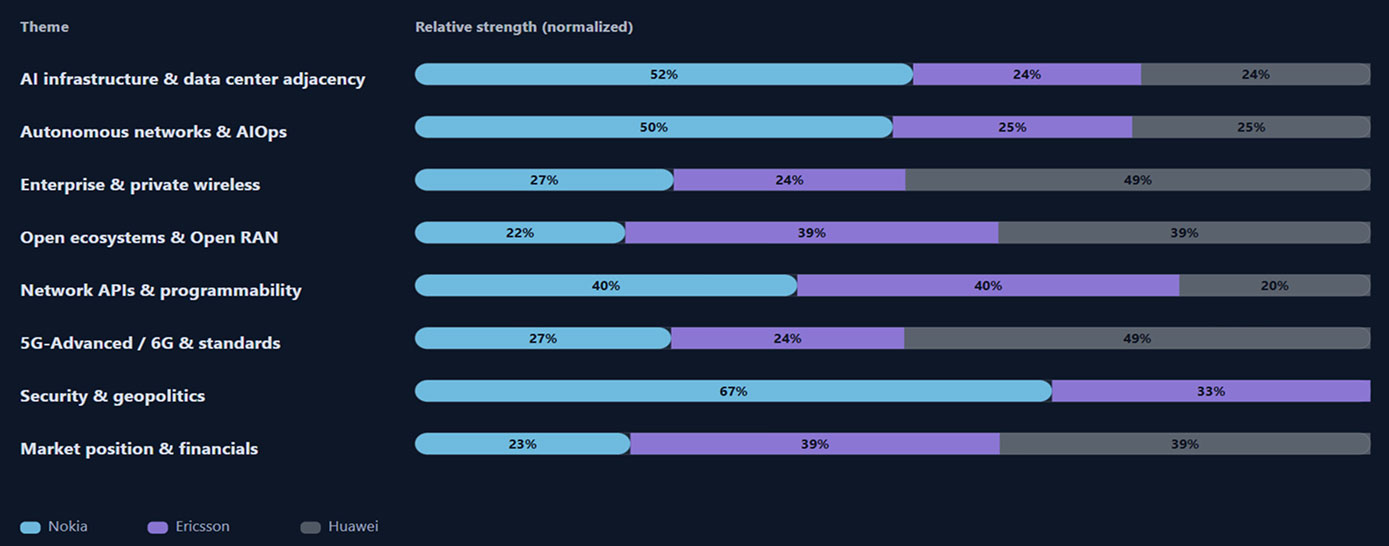
In 5G-Advanced/6G, Huawei dominates the conversation and is framed as moving faster, filing more patents and driving the technical roadmap. Ericsson gets credited for translating that into operator partnerships and commercial deployments. While Nokia has Bell Labs (one of the most credible R&D brands in telecom), the perception doesn’t connect research to execution.
When it comes to Market Position & Financials, Ericsson owns a “market leader” perception across AI engines. This isn’t because they’re objectively bigger in every segment; it’s because analyst coverage, financial press and trade media consistently frame them that way.
A Starting Point, Not a Final Verdict
It’s worth emphasizing that this audit was conducted in a single geography. AI engines can return meaningfully different results depending on where the query originates. Local trade press, regional analyst coverage and more all influence what gets cited and how narratives are weighted.
This exercise gives us a strong directional signal, but we’d want to replicate it across each of Nokia’s priority markets before drawing firm conclusions. Our preliminary insights from other regions already point to different informing sources and subtly different perceptions of Nokia. But a full market-by-market view is where the real strategic insights will emerge.
